
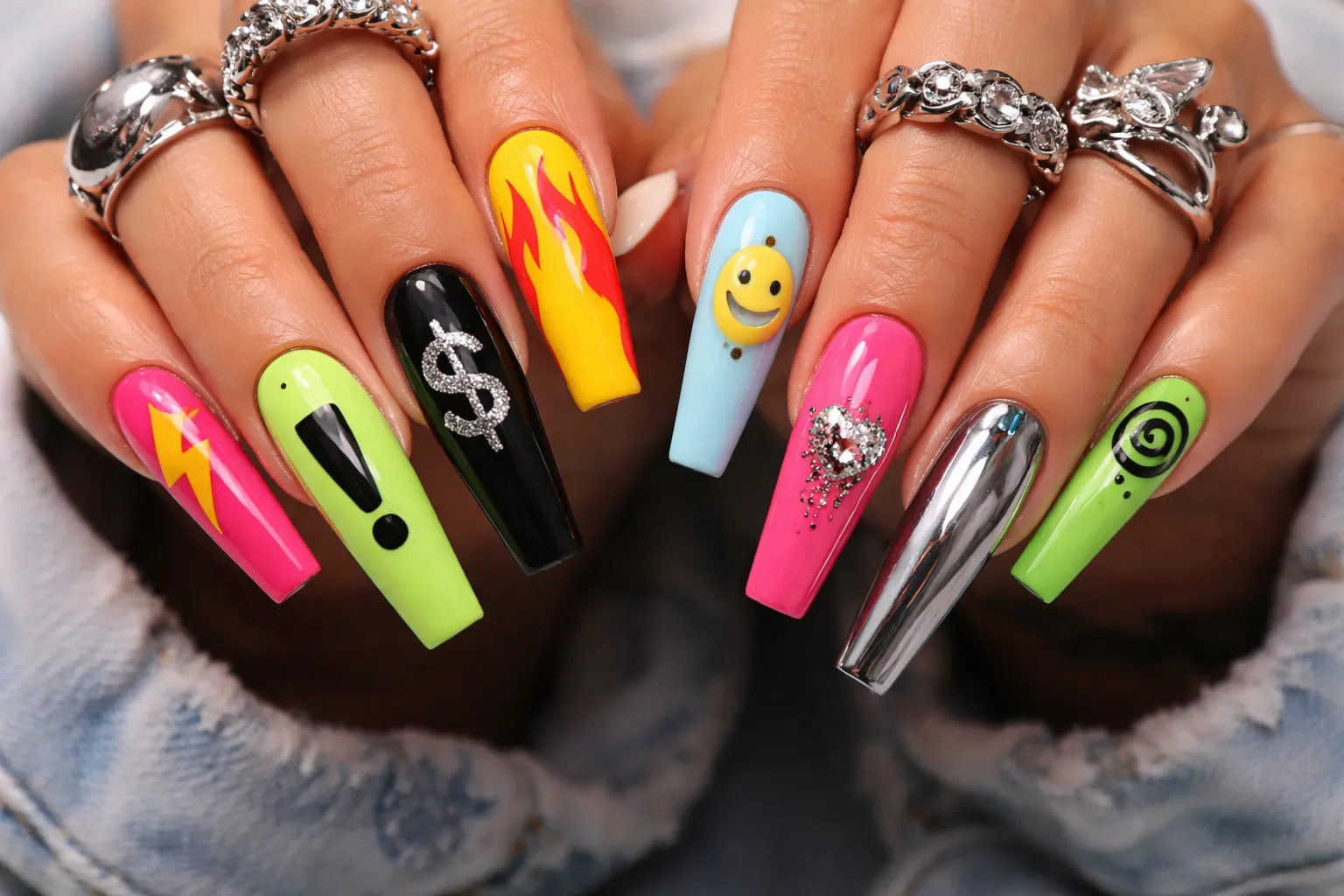
Bad Bunny nails are no longer a niche trend whispered about on Instagram or spotted only on red carpets. They’re everywhere. On stage. On TikTok. In nail salons that used to offer nothing bolder than a French tip. And they matter because they represent something bigger than polish and gel. They represent freedom.
When people search for bad bunny nails, they’re not just looking for colors or designs. They’re looking for permission to experiment. To be expressive. To wear something bold without explanation. That’s the power Bad Bunny has brought into beauty culture—and nail art is one of the clearest places where that influence shows up.
This isn’t about copying a celebrity.
It’s about channeling confidence.
Below is a deep, practical, wearable guide to bad bunny nails—what they are, why they work, and how to make them your own without feeling costume-y or overdone.
Why Bad Bunny Nails Are Everywhere Right Now
Bad Bunny didn’t “start” nail art. But he normalized it in spaces where it was still quietly discouraged. Sports interviews. Fashion campaigns. Global tours. His nails weren’t hidden. They were highlighted.
That visibility changed expectations.
Suddenly, nail art wasn’t locked into gender or occasion. It became personal style. And that’s why bad bunny nails resonate so strongly today. They don’t ask for approval. They assume it.
From a beauty industry standpoint, this shift has had real impact:
- Nail techs report more requests for bold, nontraditional designs
- Men and non-binary clients are booking nail appointments for the first time
- Minimalist and maximalist nail trends are now coexisting, not competing
Bad bunny nails sit comfortably in the middle. Loud when you want them to be. Subtle when you don’t.
What Are Bad Bunny Nails, Exactly?
Bad bunny nails aren’t a single look. That’s the point.
They’re a design philosophy, not a template.
At their core, bad bunny nails are:
- Expressive instead of uniform
- Intentional instead of trendy-for-a-week
- Comfortable breaking symmetry, rules, and expectations
You’ll often see:
- Mismatched designs across fingers
- Strong color contrasts
- Graphic elements instead of florals
- A mix of playful and serious details
One nail might be neon pink. Another matte black. Another clear with a tiny symbol. Together, they work because they tell a story instead of following a formula.
The Cultural Shift Behind the Trend
This trend didn’t come from nowhere.
Bad Bunny’s public embrace of nail art aligned with a broader movement in beauty: self-expression over conformity. The same shift that made cropped jackets on men acceptable. Or skirts on runways feel less shocking. Nails simply followed.
What changed was visibility.
When a global artist treats nail art as normal, not performative, it sends a signal. You don’t need to justify it. You don’t need a reason. And you just like it.
That’s why bad bunny nails aren’t about shock value. They’re about comfort in being seen.
Core Design Elements That Define Bad Bunny Nails
If you strip away the hype, certain design choices show up again and again. These elements are what make a set read as “bad bunny nails” even without direct references.
1. Bold, Confident Color Choices
Neons. Pastels. Black-and-white contrast. Jewel tones.
Nothing muddy. Nothing accidental.
Colors are chosen to stand on their own or intentionally clash. Both approaches work.
2. Finish Matters More Than You Think
High-gloss finishes feel playful and pop-heavy.
Matte finishes feel editorial and controlled.
Many bad bunny nail sets mix both. Glossy base with matte accents. Or matte nails with one glossy statement finger.
3. Graphic Over Literal
Instead of detailed portraits or logos, designs lean graphic:
- Lines
- Shapes
- Icons
- Abstract marks
This keeps the look wearable instead of costume-like.
4. Mismatch Is a Feature
Uniform nails feel safe.
Bad bunny nails don’t aim for safe.
Different colors or designs across fingers are intentional. They signal confidence.
Popular Bad Bunny Nail Color Palettes
Color choice is where most people hesitate. So let’s make it practical.
Here are palettes that consistently work for bad bunny nails without feeling overwhelming.
| Palette Style | Best Colors | Why It Works |
| Neon Pop | Hot pink, lime, electric blue | High energy, festival-ready |
| Soft Pastel | Lavender, baby blue, peach | Expressive but subtle |
| Dark Contrast | Black, white, chrome | Editorial, fashion-forward |
| Tropical Bright | Yellow, turquoise, coral | Puerto Rico–inspired vibrancy |
If you’re new to bold nails, choose one strong color and balance it with neutrals. You’ll still get the effect without the anxiety.
Bad Bunny Nails by Nail Shape
Shape changes everything.
A design that feels wearable on short square nails can feel dramatic on stilettos. Neither is wrong. You just need alignment.
Short Square or Squoval
- Best for graphic lines and single-color statements
- Low maintenance
- Ideal for everyday wear
Almond
- Softens bold colors
- Great for abstract art
- Balanced between edgy and elegant
Coffin or Ballerina
- Perfect for statement designs
- Works well with color blocking
- High-impact, less subtle
Stiletto
- Dramatic by default
- Best for editorial or event nails
- Not for beginners, but unforgettable
Bad bunny nails don’t require long nails. They require intention.
Design Ideas That Capture the Bad Bunny Aesthetic
If you’re building inspiration, start here.
Minimal but Expressive
- Neutral base with one symbol
- Clear nails with tiny color accents
- Single-line art on one finger
Playful Graphics
- Smiley faces
- Stars or flames
- Abstract shapes
Statement Sets
- Every nail different
- Color-blocked fingers
- Mixed finishes
The goal isn’t to copy. It’s to curate.
Album-Era Energy Without Being Literal
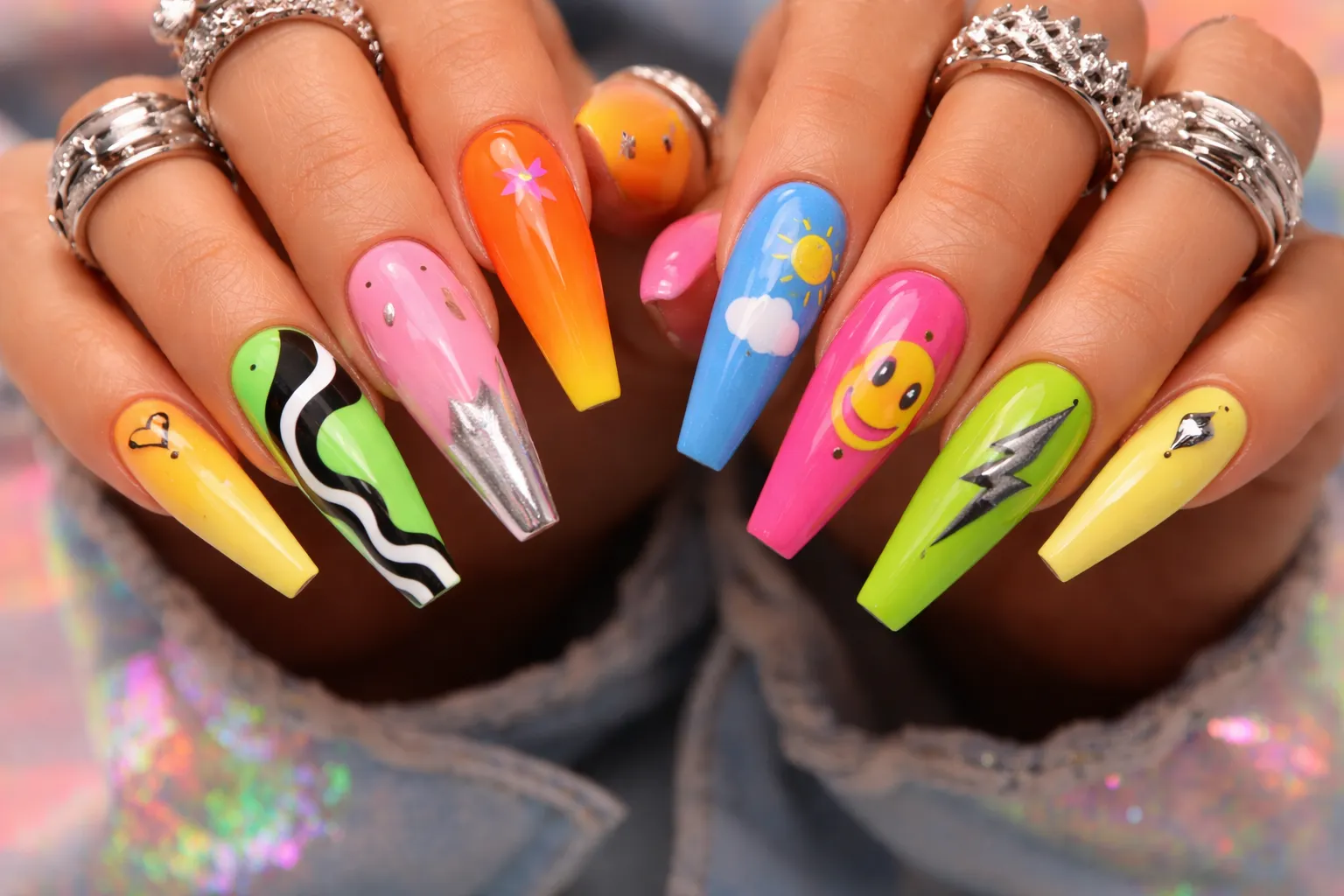
Many people want album-inspired bad bunny nails without logos or text. That’s smart.
Instead of referencing names or covers, translate mood into design:
- High-energy music → bright colors and gloss
- Emotional tracks → muted tones and matte finishes
- Experimental eras → asymmetry and abstract art
This keeps the look timeless instead of date-stamped.
Seasonal Bad Bunny Nail Ideas
Bad bunny nails adapt easily to seasons.
Summer
- Neon shades
- Glossy finishes
- Festival-friendly graphics
Fall
- Deeper tones like burgundy or olive
- Matte finishes
- Minimal line art
Winter
- Black, chrome, white
- Sharp contrasts
- Clean, graphic designs
Seasonality helps bold nails feel grounded.
Everyday vs Statement Bad Bunny Nails
Not every set needs to scream.
For daily wear:
- Limit bold colors to one or two nails
- Choose shorter lengths
- Use neutral bases with expressive accents
For events or concerts:
- Go longer
- Embrace color mixing
- Try full mismatch sets
Both count as bad bunny nails. Context decides intensity.
DIY vs Salon: What Actually Works
Let’s be honest.
Some designs look easy on Instagram and fail in real life.
DIY-Friendly Ideas
- Single-color sets
- Simple line art using nail striping tape
- Stickers or decals
Salon-Recommended Designs
- Multi-layer graphics
- Chrome or specialty finishes
- Intricate mismatch sets
If precision matters, book a pro. Confidence comes from clean execution.
How to Ask Your Nail Tech for Bad Bunny Nails
Clarity saves time and money.
Instead of saying “I want bad bunny nails,” try:
- “Bold, expressive nails with mixed designs”
- “Graphic, non-floral nail art”
- “Mismatched colors with a clean finish”
Bring 3–5 reference images. Point out what you like in each. Not the whole image. The details.
That collaboration is where great sets happen.
Maintenance Tips for Bold Nail Designs
Bold nails show wear faster. That’s reality.
Protect your set by:
- Using cuticle oil daily
- Wearing gloves for cleaning
- Avoiding using nails as tools
A strong top coat refresh at day 7 can extend wear by a full week.
Who Should Try Bad Bunny Nails?
Anyone who wants to.
That’s not a slogan. It’s the truth.
Bad bunny nails work for:
- All genders
- All professions (with smart design choices)
- All ages
You don’t need permission. You need curiosity.
Start subtle if you want. Build from there.
Why Bad Bunny Nails Are More Than a Trend
Trends fade. Expression doesn’t.
Bad bunny nails endure because they aren’t about copying someone famous. They’re about choosing visibility on your own terms. About wearing something because it feels right, not because it’s expected.
That’s why this keyword keeps rising.
That’s why salons keep getting requests.
And that’s why people keep searching for bad bunny nails.
They’re not just nails.
They’re a signal.
And once you try them, going back to “safe” feels boring.
FAQs
Bad bunny nails are bold, expressive nail designs inspired by confident self-expression, graphic art, and mixed color aesthetics.
No, bad bunny nails are gender-neutral and designed for anyone who enjoys creative, statement nail art.
Yes, they can be toned down using neutral colors, short nail lengths, and minimal graphic accents.
Not at all—short square or squoval nails work just as well for clean, graphic designs.
Neons, pastels, black-and-white contrasts, and tropical brights are all popular choices.
They can be, especially when designs are minimal and colors are balanced with neutral tones.
With proper prep and care, gel or acrylic bad bunny nails typically last two to three weeks.
Simple designs and single-color looks are DIY-friendly, but detailed graphics are best done by a nail tech.
Ask for bold, graphic, mismatched designs with strong color choices and a clean finish.
They reflect modern self-expression, breaking traditional style norms while staying fashion-forward.