
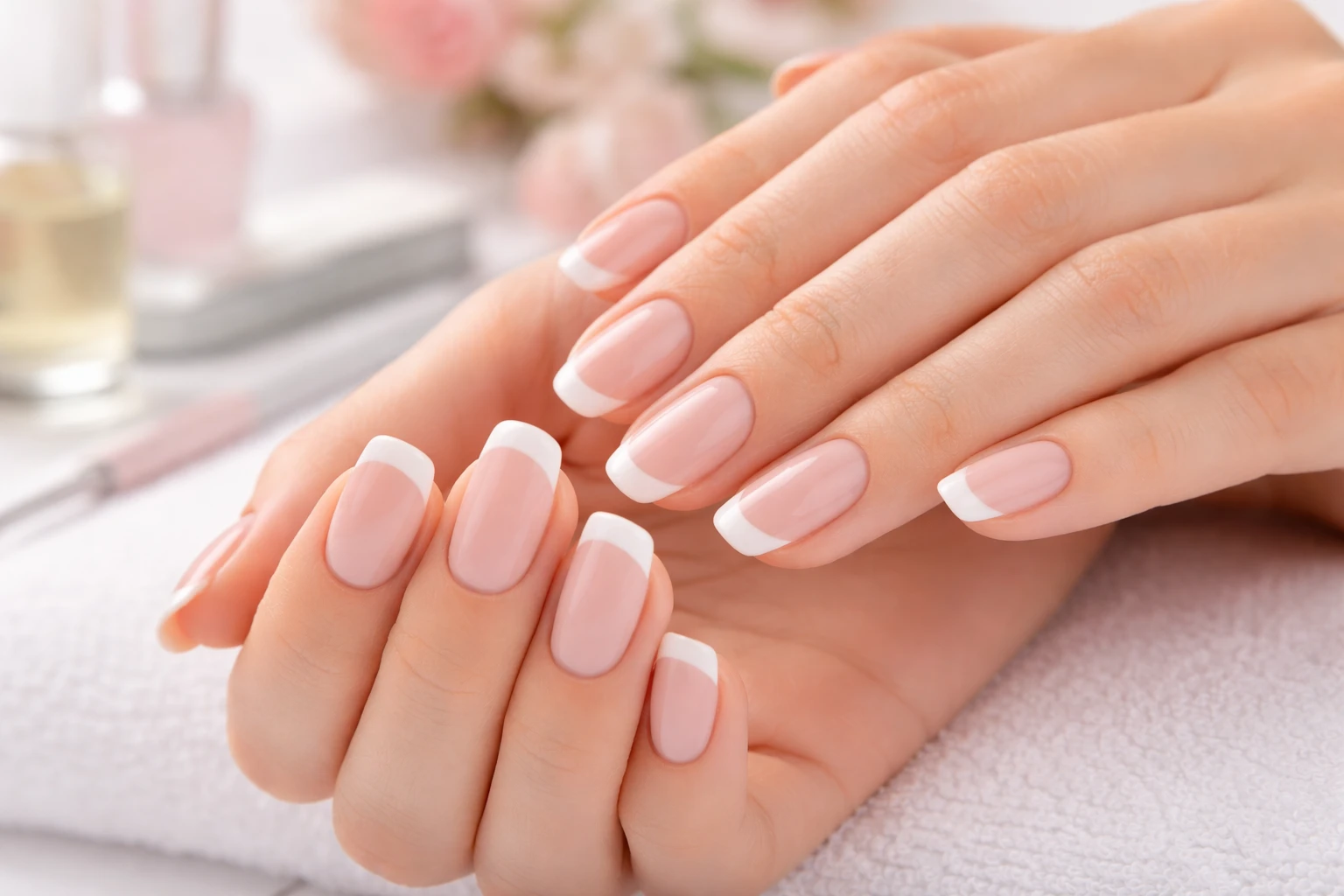
The traditional French manicure with neutral base isn’t trendy. It isn’t loud. It doesn’t chase attention. And that’s exactly why it continues to dominate nail salons decade after decade.
In a world of chrome powders, 3D embellishments, and shifting seasonal palettes, the traditional French manicure with neutral base remains the benchmark of clean, balanced beauty. It’s refined without being rigid. Soft without being invisible. Polished without trying too hard. I’ve seen clients experiment with bold designs for years ayet they always come back to this classic. There’s something grounding about it. Let’s break down what makes it work. And more importantly, how to do it exceptionally well.
What Defines a Traditional French Manicure with Neutral Base?
At its core, this look is about restraint and proportion. A traditional French manicure with neutral base includes:
- A sheer or softly opaque neutral pink, beige, or blush base
- A crisp white tip
- A smooth, curved smile line
- A high-gloss finish
Simple. But not simplistic.
The neutral base is the foundation. It enhances the natural nail bed instead of covering it. It creates the illusion of length. It softens the contrast between nail plate and tip. Without the right base, the white tip can look harsh. With the right base, everything feels seamless. This is where precision matters.
The Power of the Neutral Base
Let’s be honest. The white tip gets most of the attention. But the base does the heavy lifting.
A well-chosen neutral base:
- Evens out nail discoloration
- Enhances natural undertones
- Makes hands look cleaner and brighter
- Creates depth under the white tip
It also determines how modern or dated the manicure looks.
Too pink? It can feel dated.
Too beige? It may look flat.
Too opaque? It loses that signature softness.
The goal is subtle enhancement. Not coverage. When executed correctly, the traditional French manicure with neutral base looks like your nails just healthier, longer, and more refined.
Choosing the Right Neutral Base for Your Skin Tone
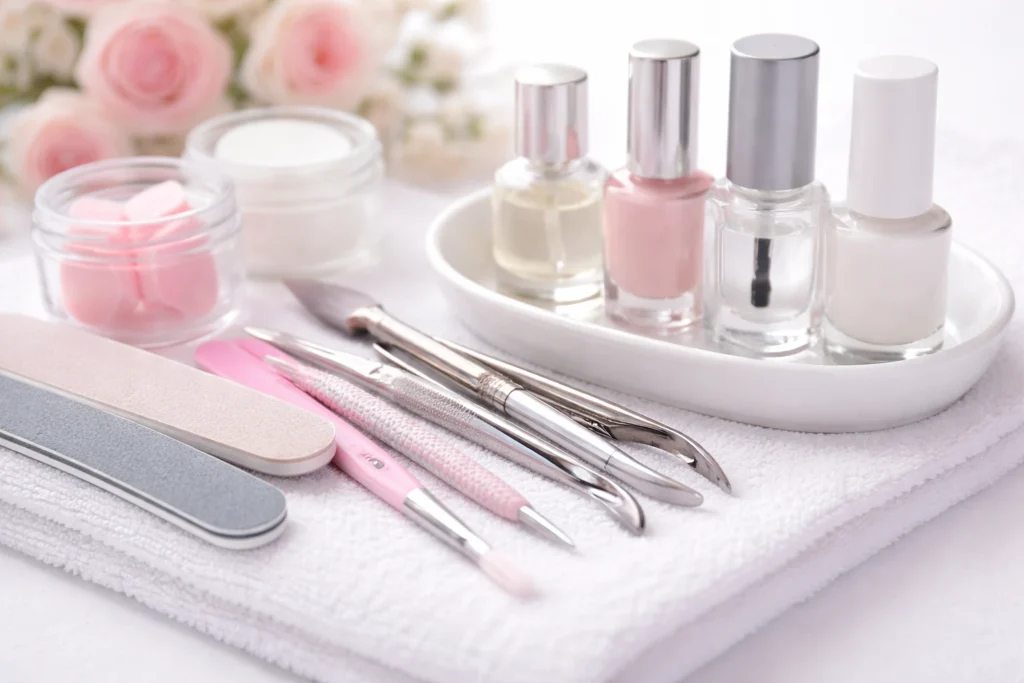
This is where most people go wrong. They choose a neutral that doesn’t match their undertone. Here’s a practical guide:
| Skin Undertone | Best Neutral Base Shades | Avoid |
| Cool | Sheer blush, soft pink, milky rose | Yellow-based beige |
| Warm | Peachy nude, warm beige, creamy pink | Blue-toned pink |
| Neutral | Balanced pink-beige hybrids | Extremely cool or warm extremes |
| Deep skin | Rich rosy nude, caramel blush, sheer mocha | Pale chalky pinks |
The key? Test against your cuticle area. If the base melts into your nail bed without creating a visible border, you’ve found your match. A traditional French manicure with neutral base should feel like a filter, not paint.
Sheer vs. Opaque Neutral Bases
This decision changes the entire look.
Sheer Base
- More natural
- Ideal for professionals
- Shows subtle nail texture
- Classic bridal choice
Soft Opaque Base
- More coverage
- Hides ridges and discoloration
- Slightly more modern
- Better for photography
I often recommend sheer for everyday wear and soft opaque for events. Both can work within a traditional French manicure with neutral base. And while bold seasonal trends like Turquoise and Aqua Summer Nail Color Combinations dominate beach vacations and resort looks, the French manicure remains the understated counterbalance calm, polished, and seasonless.
Nail Shapes That Elevate the Look
Shape affects elegance more than color does.
Here’s how different shapes interact with a traditional French manicure with neutral base:
- Square – Classic and structured
- Squoval – Balanced and practical
- Almond – Elongates fingers and softens the tip
- Oval – Timeless and feminine
- Short natural nails – Surprisingly chic when proportions are correct
If the nails are short, keep the white tip thin. Thick tips on short nails compress the nail bed visually. Proportion is everything.
Step-by-Step: How to Execute It Perfectly
1. Nail Preparation
Do not skip prep.
- Push back cuticles gently
- Remove invisible cuticle from the nail plate
- Shape with a fine-grit file
- Lightly buff to smooth ridges
- Cleanse with alcohol or nail dehydrator
Surface smoothness matters. Think of it like preparing a canvas before painting. In other words, avoid aesthetic dissonance.
If the surface isn’t even, the neutral base won’t lay evenly.
2. Apply the Neutral Base
- Apply thin coats
- Cure or dry fully between layers
- Avoid flooding the cuticle
Two thin coats are better than one thick one. The base should look even but not heavy. When done right, the traditional French manicure with neutral base begins to glow naturally before the white tip is even added.
3. Creating the White Tip
The smile line defines the manicure.
- Start at one sidewall
- Curve gently toward the center
- Mirror on the opposite side
Keep the line symmetrical. Slightly softened white tones look more refined than harsh, bright whites.
4. Top Coat and Seal
Apply a glossy top coat. Cap the free edge. Gloss adds dimension between the base and tip. Matte alters the aesthetic entirely.
Common Mistakes That Instantly Ruin It
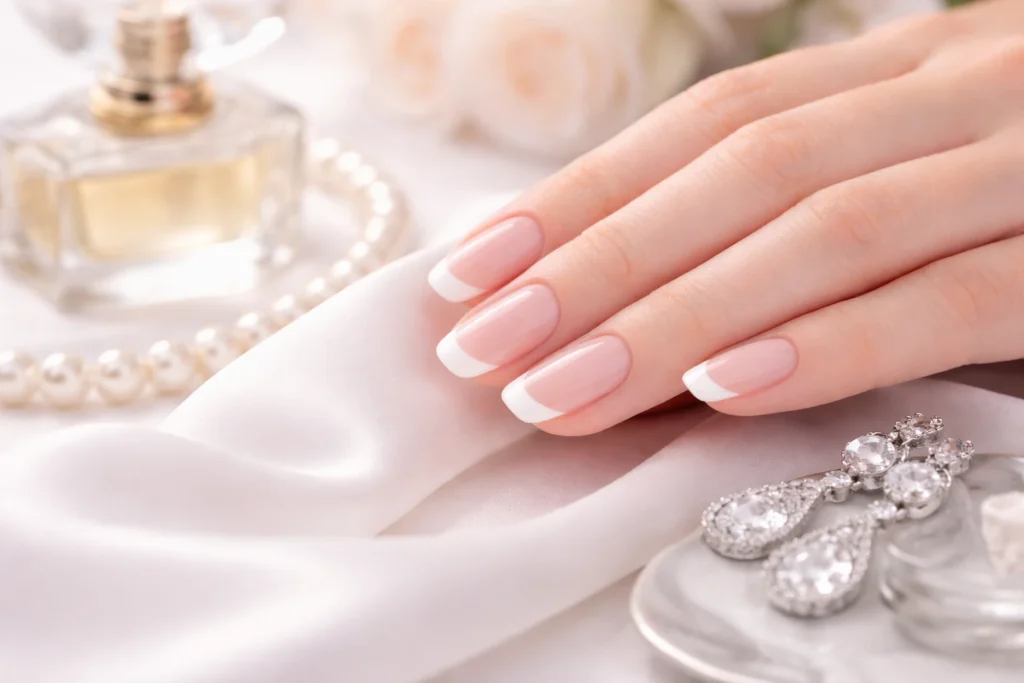
- White tips that are too thick
- Uneven smile lines
- Base shade mismatch
- Chalky polish texture
- Skipping cuticle oil
The traditional French manicure with neutral base thrives on subtlety. Once proportions shift, the harmony disappears.
Why It Still Feels Relevant
Minimalism cycles. Clean elegance does not.
The traditional French manicure with neutral base aligns with:
- Professional wardrobes
- Bridal styling
- Capsule fashion
- Quiet luxury aesthetics
It doesn’t compete with outfits. It complements them. You can adjust undertones. Refine tip thickness. Change nail shape. The foundation remains timeless.
Final Thoughts
The traditional French manicure with neutral base is about control. About proportion. About thoughtful detail. It isn’t loud. It doesn’t beg for attention. But it always looks intentional.
Trends rotate. Colors surge and fade. The traditional French manicure with neutral base stays. And sometimes, that consistency is the boldest choice of all.
FAQs
It’s a classic nail style featuring a sheer or soft neutral base with a crisp white tip and glossy finish.
Regular polish lasts about 5–7 days, while gel versions can last up to 2–3 weeks.
A neutral base enhances your natural nail tone subtly, while nude shades may offer more coverage depending on opacity.
Square, squoval, almond, and oval shapes all complement it, depending on your personal style and nail length.
Yes, just keep the white tip thin to maintain proper proportion and avoid shortening the look.
Match the shade to your skin undertone cool, warm, or neutral for a seamless, natural finish.
Absolutely. It’s one of the most workplace-appropriate and universally polished nail styles available.
Yes, but steady hands and quality tools are essential for clean, symmetrical tips.
Thick white tips or mismatched base shades can make it appear dated instead of refined.
Yes, it’s a popular bridal choice because it’s elegant, timeless, and photographs beautifully.