This post contains affiliate links. As an Amazon Associate, Nailz in Bloom earns from qualifying purchases, at no extra cost to you.
A manicure can look effortless, but anyone who has worked with nail polish knows that results depend heavily on technique. One of the most important yet overlooked elements of a beautiful manicure is nail polish opacity and layering techniques. These two factors determine how smooth the polish appears, how rich the color looks, and how professional the final manicure feels.
Some nail polishes cover the nail in one coat. Others look streaky until several layers are applied. Understanding nail polish opacity and layering techniques allows you to control these outcomes instead of guessing your way through each manicure. When you learn how opacity works and how layering builds depth, you gain the ability to create flawless color, smooth coverage, and even complex nail art. Let’s break down the science and practical application behind it.
Understanding Nail Polish Opacity
Before discussing techniques, it helps to understand what opacity actually means in the world of nail polish. Opacity refers to how much of the natural nail shows through a polish layer. In simple terms, it describes how transparent or solid the color appears when applied.
The concept of opacity is rooted in pigment concentration. Polishes with higher pigment levels provide fuller coverage. Those with lower pigment levels appear translucent or sheer. If you’re curious about how pigments affect color visibility in materials and coatings, you can explore the concept of pigment.
In nail polish, pigment suspension inside the formula determines whether you’ll need one coat or three.
Types of Nail Polish Opacity
There are three main categories of nail polish opacity.
Sheer Polish
Sheer polish contains lower pigment levels. It allows the natural nail to show through and is often used for natural or minimalist manicures.
Common uses include:
- French manicures
- Natural nail looks
- Jelly nail art designs
Semi-Opaque Polish
Semi-opaque polish offers moderate coverage. It usually requires two coats to achieve a fully even color.
These formulas are common in:
- Soft pastels
- Light neutral tones
- Shimmer finishes
Fully Opaque Polish
Opaque polish contains a higher concentration of pigments and often provides complete coverage in one or two coats.
These are typically:
- Creme finishes
- Bold colors
- Highly pigmented gel polishes
Understanding these differences is the foundation of mastering nail polish opacity and layering techniques.
Why Opacity Matters in Manicures
Opacity plays a larger role in manicure quality than most people realize. If a polish lacks opacity and is applied too thickly, it can appear uneven. Thick coats also increase drying time and raise the risk of smudging. On the other hand, when you understand nail polish opacity and layering techniques, you can build color gradually for a smoother finish.
Opacity affects several manicure factors:
- Color accuracy
- Smoothness of the finish
- Depth of nail art designs
- Durability of the manicure
Professional nail artists rely heavily on layering to control these elements.
Tools and Materials Needed for Proper Layering
Achieving smooth layers starts with the right tools.
Here are the basic supplies used in professional manicures.
Essential Tools
- Nail file and buffer
- Cuticle pusher
- Lint-free wipes
- Nail cleanser or alcohol
Polish Products
Optional Nail Art Supplies
- Detail brushes
- Makeup sponge for gradients
- Glitter polish
- Striping tape
Using quality products improves the results of nail polish opacity and layering techniques significantly.
Preparing Nails for Perfect Polish Opacity
Nail preparation directly affects how polish layers behave.
Even the best polish formula can look uneven on an improperly prepared nail surface.
Step 1: Shape the Nail
Use a fine nail file to shape nails evenly. Smooth edges help polish flow properly.
Step 2: Clean the Nail Plate
Remove oils and residue using rubbing alcohol or nail cleanser.
Oils prevent polish from bonding correctly.
Step 3: Apply a Base Coat
A base coat creates an even surface and improves adhesion. Some base coats are designed to fill nail ridges, which helps polish appear more opaque. Good preparation dramatically improves results when practicing nail polish opacity and layering techniques.
Basic Nail Polish Layering Techniques
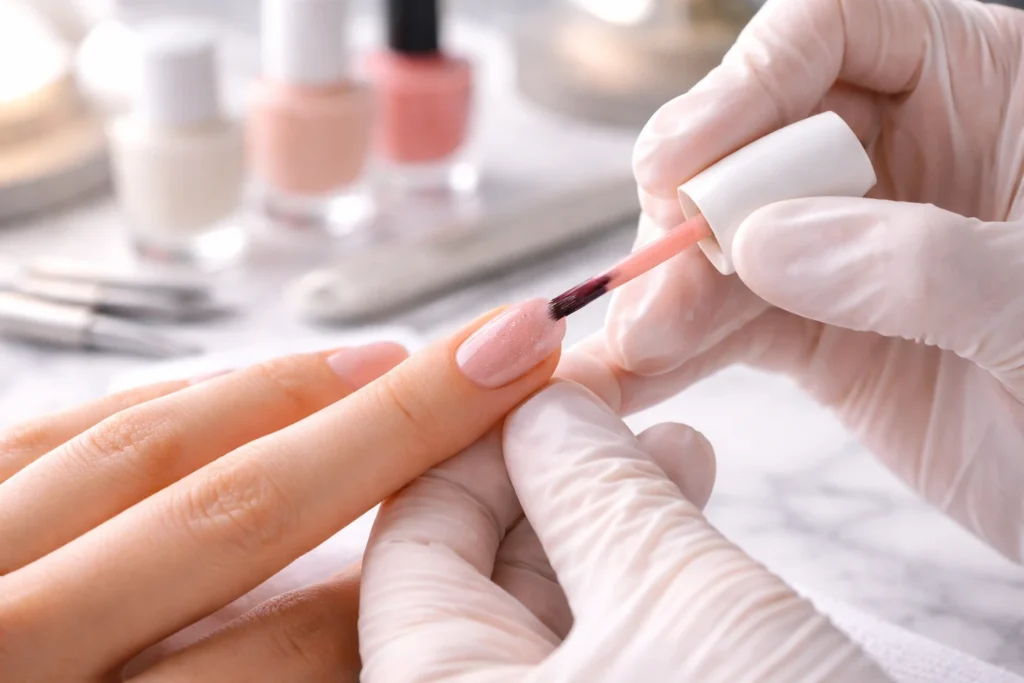
Layering is the key to achieving smooth color coverage. Professional nail artists rarely apply thick coats. Instead, they build color gradually.
The Thin Coat Method
Thin coats dry faster and reduce streaking.
To apply a thin coat:
- Wipe excess polish from the brush
- Place the brush slightly above the cuticle
- Push gently toward the cuticle
- Pull down the nail in smooth strokes
Thin layers are the backbone of effective nail polish opacity and layering techniques.
The Two-Coat Coverage Method
Most nail polishes perform best with two layers.
The first coat creates a base layer.
The second coat evens out the color and removes streaks.
Allow at least one minute between coats to prevent dragging the polish underneath.
The Three-Coat Depth Method
Sheer and jelly polishes often require three coats. Each layer increases the color intensity.
This technique is commonly used in:
- Jelly nail designs
- Glass nails
- Layered glitter manicures
With practice, this becomes one of the most effective nail polish opacity and layering techniques for creating depth.
Advanced Nail Polish Layering Techniques
Once you understand the basics, layering becomes a creative tool.
Gradient Layering
Gradient nails blend two or more colors. A makeup sponge lightly dabs polish onto the nail, building color gradually.
Steps include:
- Apply base color
- Add gradient colors to sponge
- Dab lightly on nail
- Seal with top coat
Gradients rely heavily on controlled layering.
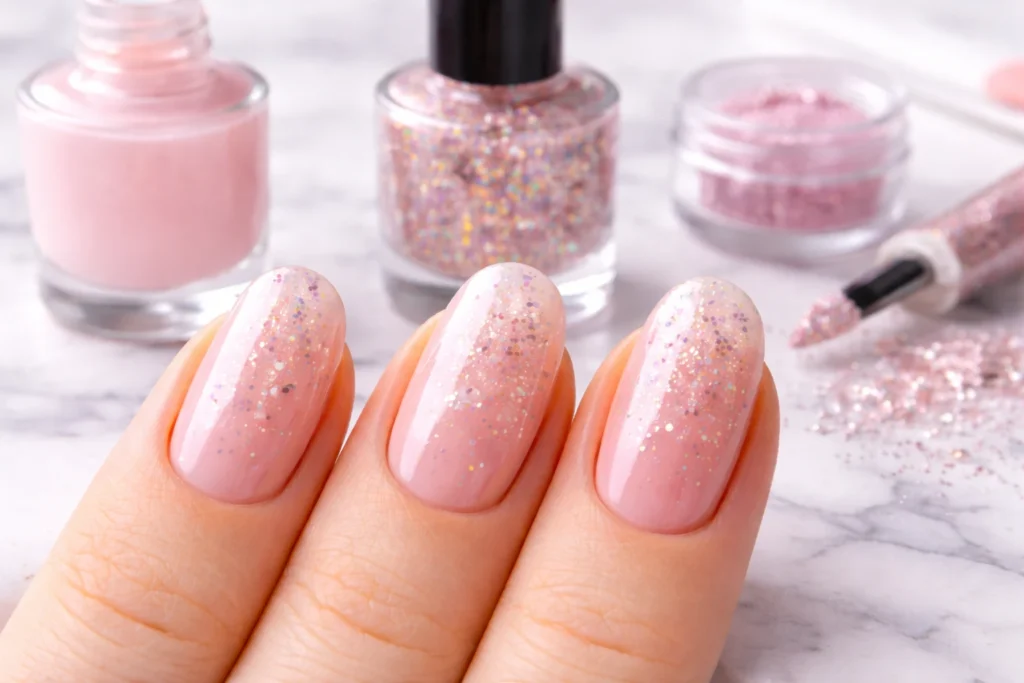
Jelly Sandwich Technique
This technique is extremely popular in nail art. It involves layering glitter between sheer polish coats. The result is a dimensional look where glitter appears suspended inside the polish.
Steps:
Apply sheer polish
Add glitter layer
Apply another sheer coat
This technique perfectly demonstrates the power of nail polish opacity and layering techniques.
Tint Layering
Tint layering allows artists to change a color’s tone using translucent polish.
For example:
- Blue tint over silver creates cool tones
- Pink tint over gold creates warmer shades
Tinting is an advanced but highly creative layering method.
How Different Nail Polish Formulas Affect Opacity
Different formulas behave differently when layered.
| Nail Polish Type | Opacity Level | Best Use |
| Sheer polish | Low | Natural manicures |
| Jelly polish | Medium | Layered nail art |
| Creme polish | High | Solid color coverage |
| Metallic polish | Medium | Reflective finishes |
| Glitter polish | Transparent base | Layered effects |
Understanding these formulas helps refine nail polish opacity and layering techniques.
Common Layering Mistakes
Even experienced manicure enthusiasts make mistakes when layering polish.
Here are the most common issues.
Applying Thick Coats
Thick layers trap solvents and take longer to dry.
They also cause bubbles.
Not Waiting Between Coats
Rushing the process can drag previous layers. Allow each coat to partially dry before applying another.
Overloading the Brush
Too much polish leads to uneven coverage. Always wipe one side of the brush before applying. Avoiding these mistakes improves the results of nail polish opacity and layering techniques.
Tips for Achieving Smooth Coverage
A few small adjustments can dramatically improve polish application.
Professional tips include:
- Apply polish using three strokes
- Keep brush pressure light
- Roll the polish bottle instead of shaking it
- Use a high-quality top coat
Rolling polish helps prevent bubbles caused by air suspension. For more information on how suspended particles behave in liquids, you can explore the concept of colloids. Understanding how particles stay evenly distributed in liquid formulas can help explain why nail polish should be mixed gently.
Nail Art Designs That Use Layering
Layering techniques are essential for many nail art styles. By controlling polish opacity and applying thin coats, nail artists can build subtle depth or dramatic effects.
Popular designs include:
Ombré Nails
Soft gradients created by blending two or more colors through sponge layering.
Glitter Depth Nails
Multiple glitter layers produce sparkle and dimension.
Jelly Nails
Translucent polish builds color slowly across layers for a glossy, glass-like appearance.
Minimalist Layered Designs
Modern manicures often rely on subtle layering for a refined look. For example, the micro French tip nail trend uses ultra-thin polish layers and delicate brush control to create a precise, barely-there tip that looks clean, modern, and sophisticated. All of these designs rely heavily on mastering nail polish opacity and layering techniques.
How to Make Sheer Polish More Opaque
Sometimes you love a color but want stronger coverage. There are several ways to increase opacity.
Use a White Base Coat
White polish underneath enhances color intensity.
Apply Three Thin Coats
Gradual layering builds pigment depth.
Use a Ridge-Filling Base Coat
A smoother surface allows pigments to spread evenly. These strategies help you control nail polish opacity and layering techniques more effectively.
When to Use Sheer vs Opaque Polish
Different manicure styles call for different opacity levels.
Sheer polish works best for:
- Natural nail looks
- Minimalist designs
- Jelly nail art
Opaque polish works best for:
- Bold manicures
- Graphic nail art
- Solid color coverage
Knowing when to use each type improves your ability to apply nail polish opacity and layering techniques creatively.
Professional Nail Artist Tips
Professionals rely on several techniques to ensure perfect polish coverage.
Some of their most valuable tips include:
- Work in bright lighting
- Use steady wrist movements
- Apply minimal pressure with the brush
- Keep layers thin and controlled
Practicing these habits will help you master nail polish opacity and layering techniques over time.
Conclusion
Perfect manicures are not about luck. They are about technique. Understanding nail polish opacity and layering techniques allows you to control color coverage, build depth, and create smooth professional finishes.
Whether you prefer minimalist manicures or complex nail art, learning how to layer polish correctly makes a dramatic difference in the final result. Start with thin coats. Be patient between layers. Experiment with different polish formulas. With practice, your manicures will become smoother, richer, and far more polished literally!
FAQs
Nail polish opacity refers to how much the polish covers the natural nail. Higher opacity means stronger color coverage with fewer coats.
Some formulas contain less pigment, making them more sheer. These require layering to achieve full coverage.
Most manicures look best with two thin coats of polish, though sheer formulas may require three layers.
Apply thin coats and allow each layer to dry slightly before adding the next to prevent streaks or bubbles.
Yes. Proper layering gradually builds pigment, making colors appear deeper and more vibrant.
The jelly sandwich technique involves layering glitter between sheer polish coats to create a dimensional effect.
Thick coats take longer to dry and can lead to bubbles, smudges, and uneven coverage.
You can apply a white base coat underneath or add additional thin layers to build stronger color coverage.
Yes. A base coat smooths the nail surface, allowing polish layers to apply more evenly.
Jelly, sheer, and glitter polishes work especially well because they allow color and texture to build gradually.