This post contains affiliate links. As an Amazon Associate, Nailz in Bloom earns from qualifying purchases, at no extra cost to you.
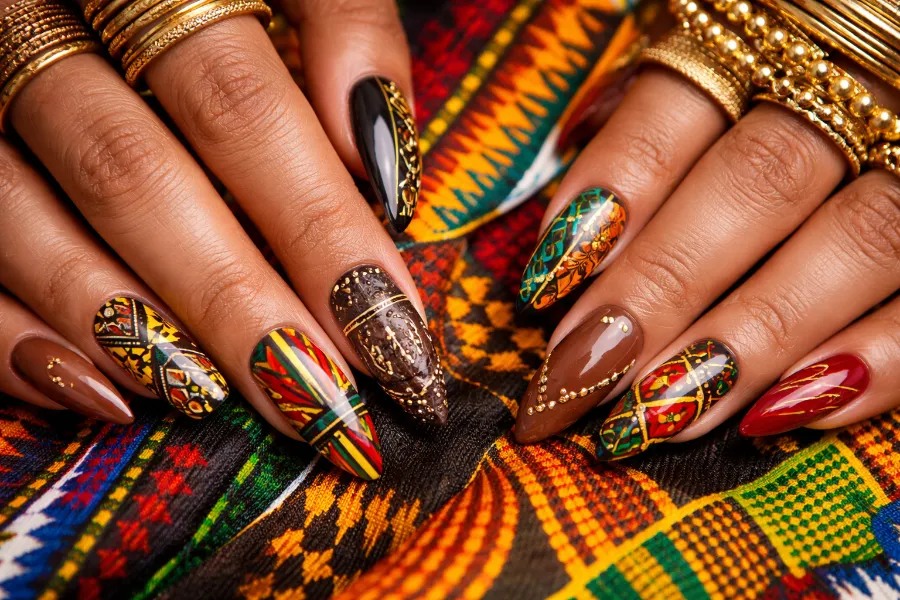
African nail designs are not just beautiful. They are expressive. They are intentional, and they carry stories that stretch across generations, regions, and identities. From bold geometric patterns to earthy color palettes and intricate detailing, African nail designs turn hands into a canvas of culture and creativity.
I love how these designs manage to feel both ancient and modern at the same time. One glance, and you can sense heritage. Look closer, and you’ll see innovation. In this guide, I’m walking you through what defines African nail designs, how to wear them confidently, and how to choose styles that feel authentic—not costume-like. We’ll keep it practical. We’ll keep it respectful. And yes, we’ll keep it stylish!
What Defines African Nail Designs?
At their core, African nail designs are inspired by visual languages that already exist in African art, textiles, architecture, and body adornment. These designs are rarely random.
They are structured. Purposeful. Balanced.
Key defining elements include:
- Geometric repetition rather than floral chaos
- Symbolic line work inspired by tribal markings and textiles
- High-contrast color pairings grounded in cultural meaning
- Texture and dimension, echoing beads, metals, and natural materials
Unlike trend-driven nail art that changes every season, African nail designs feel rooted. They don’t chase relevance. They already have it.
The Cultural Roots Behind the Style
African-inspired nail art often draws from multiple regions across the continent, including West, East, and Southern Africa. While Africa is not a monolith, many visual themes overlap in fascinating ways.
You’ll often see inspiration pulled from:
- Traditional textiles
- Ceremonial body paint
- Jewelry and beadwork
- Architectural motifs
- Nature and spiritual symbolism
Countries like Nigeria, Ghana, Mali, and South Africa frequently influence modern African nail designs through their fabrics, symbols, and color traditions.
The key takeaway? These designs come from somewhere. Knowing that “somewhere” makes your manicure stronger.
Traditional Patterns and Their Visual Language
Patterns are the backbone of African nail designs. They’re not filler. They’re the message.
Common pattern styles include:
- Chevron and zigzags – movement, continuity, resilience
- Dots and grids – unity, community, order
- Parallel lines – balance, strength, rhythm
- Abstract symbols – storytelling and identity
These patterns often originate from textiles like Kente cloth or mud cloth, where repetition creates meaning over time. When translated onto nails, scale matters.
Actionable tip:
For short nails, choose simplified versions of traditional patterns. One or two repeating elements will read cleaner than a full print.
Color Palettes That Make African Nail Designs Pop
Color in African nail designs is never accidental. It’s emotional. It’s symbolic. And it’s bold without being reckless.
Common Color Families
| Color Group | Why It Works |
| Earth tones (brown, clay, sand) | Grounded, wearable, timeless |
| Red | Strength, vitality, celebration |
| Yellow & gold | Wealth, warmth, energy |
| Green | Growth, renewal, nature |
| Blue | Harmony, protection, calm |
One of the biggest mistakes people make is overloading color. African nail designs don’t need every bold shade at once.
Try this instead:
Pick one dominant color, one neutral, and one accent. Let the pattern do the talking.
African Print–Inspired Nail Designs
Textiles are one of the most direct sources of inspiration for African nail designs. The challenge? Translating fabric into nail-sized art without losing clarity.
Popular print inspirations include:
- Ankara-style wax prints
- Kente cloth patterns
- Mud cloth (Bogolanfini) textures
To keep these designs wearable:
- Use neutral base colors
- Limit prints to accent nails
- Repeat one motif across the set instead of multiple prints
This approach respects the complexity of the original fabric while keeping your nails polished and modern.
Beads, Texture, and 3D Details
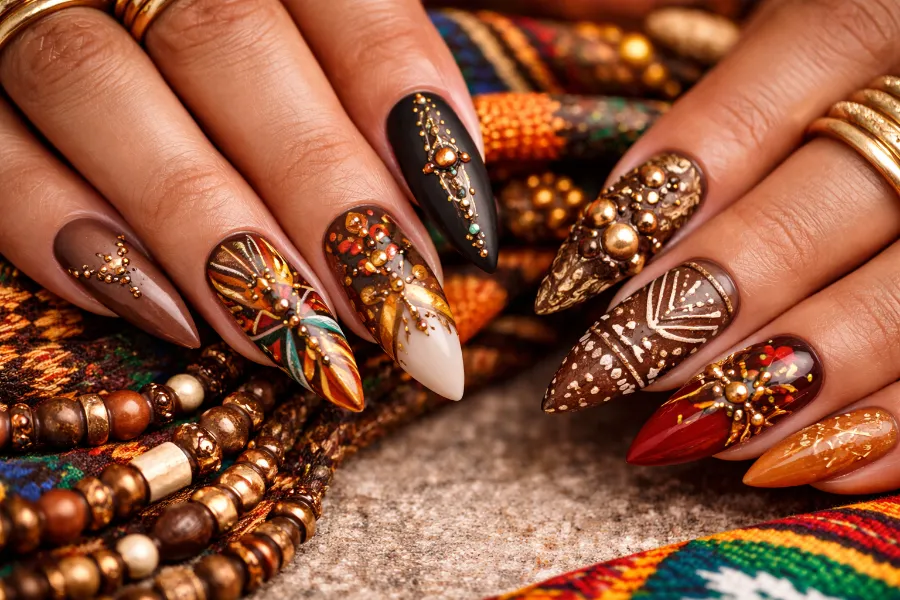
African nail designs often shine when texture is involved. Think beads, raised lines, metallic accents, and matte finishes that echo traditional adornment.
That said, restraint matters.
When 3D Works Best
- Statement nails for events
- One or two accent fingers
- Medium to long nail lengths
When to Skip It
- Daily wear
- Hands-on jobs
- Short nails
Pro tip:
If you love texture but hate bulk, ask for painted bead illusions instead of real embellishments. Same visual impact. Zero snagging.
Minimal African Nail Designs for Everyday Wear
Yes, African nail designs can absolutely be subtle. Minimal does not mean boring. It means intentional.
Minimal styles often include:
- Neutral bases with thin tribal lines
- Single-symbol accent nails
- Matte finishes with glossy detailing
- Earth tones with soft contrast
These designs work beautifully in professional settings while still honoring African inspiration.
If you’re new to African nail designs, this is the safest place to start.
Bold and Statement African Nail Designs
Sometimes, subtle just won’t do. And that’s okay.
Bold African nail designs are unapologetic. They’re meant to be seen. They shine at:
- Cultural celebrations
- Weddings and festivals
- Fashion shoots
- Vacations and summer events
Bold doesn’t mean chaotic. The best statement sets still follow structure:
- Consistent pattern logic
- Balanced color distribution
- Clean line work
When done right, bold African nail designs feel powerful—not overwhelming.
Choosing African Nail Designs by Nail Shape
Your nail shape matters more than you think. Patterns behave differently depending on length and width.
Best Matches by Shape
| Nail Shape | Design Advice |
| Short square | Minimal lines, single symbols |
| Almond | Vertical patterns, elongated motifs |
| Coffin | Repeating prints, bold contrasts |
| Stiletto | Abstract symbols, asymmetry |
Actionable insight:
Longer nails allow for storytelling. Shorter nails benefit from symbolism.
African Nail Designs for Special Occasions
Special moments deserve thoughtful design choices.
For weddings and ceremonies:
- Use gold, white, or neutral bases
- Add symbolic patterns sparingly
- Coordinate with fabric or jewelry
For festivals and celebrations:
- Go bolder with color
- Use full-pattern sets
- Mix matte and gloss finishes
Matching your nails to the occasion elevates the entire look.
Modern Fusion: Where Tradition Meets Trend
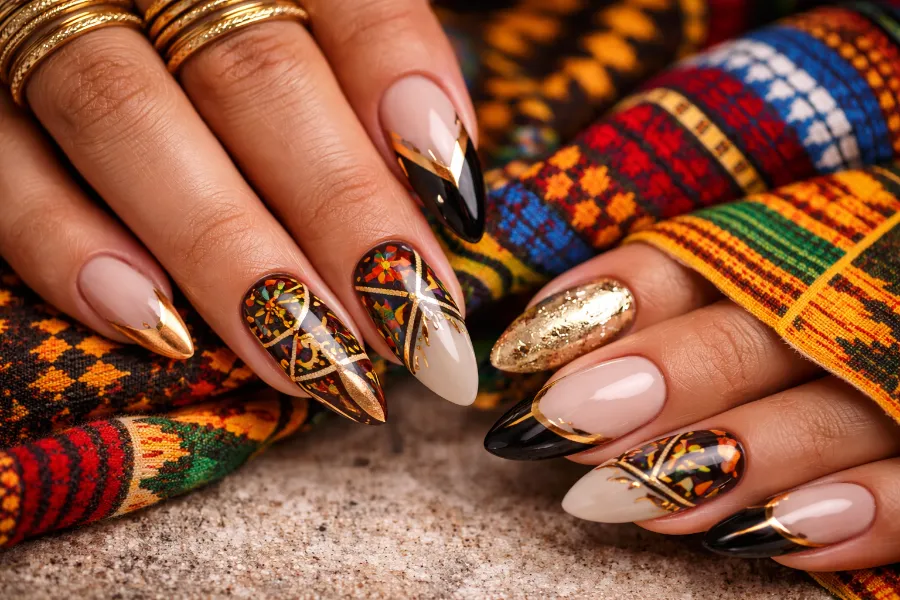
One reason African nail designs remain relevant is their adaptability. They blend beautifully with modern techniques.
Popular fusion styles include:
- African patterns with French tips
- Gold foil accents over tribal prints
- Matte neutrals with glossy symbols
- Negative space paired with geometric art
This fusion keeps African nail designs fresh while honoring their roots.
How to Choose an Authentic African Nail Design
Authenticity isn’t about rules. It’s about respect.
Ask yourself:
- Do I understand the inspiration?
- Am I simplifying or stereotyping?
- Am I appreciating or copying?
Research helps. So does working with nail artists who understand the culture or have experience with African-inspired art.
Supporting African creators and nail technicians adds another layer of meaning.
Nail Care Tips for Intricate African Nail Designs
Detailed nail art deserves extra care.
To extend wear time:
- Use a strong base coat
- Seal designs with two thin top coats
- Avoid harsh chemicals without gloves
- Refresh top coat every 3–4 days
Texture and line work last longer when protected properly.
DIY vs Salon: What Makes Sense?
DIY works when:
- Designs are minimal
- Patterns are simple
- You’re practicing techniques
Salon is better when:
- Patterns are complex
- 3D elements are involved
- Precision matters
African nail designs often benefit from professional execution, especially when detail and symmetry are key.
Why African Nail Designs Continue to Inspire
African nail designs aren’t a passing trend. They endure because they’re rooted in meaning, beauty, and adaptability. They allow you to wear culture with confidence. To tell a story without saying a word.
Whether you choose a minimalist accent or a bold, full-pattern set, African nail designs invite intention into beauty. And that? That never goes out of style.
If you’re exploring African nail designs for the first time, start small. Learn. Experiment. And most importantly—wear them with pride.
FAQs
African nail designs draw inspiration from traditional textiles, tribal patterns, symbolic markings, and cultural art found across different African regions.
Yes, minimalist African nail designs using neutral colors and subtle patterns work well for daily and professional settings.
Many patterns and colors used in African nail designs are symbolic, representing ideas like strength, unity, growth, or celebration.
Absolutely—simplified patterns, thin lines, and single accent nails are ideal for short nail lengths.
Earth tones, bold reds, yellows, greens, blues, and gold accents are commonly used due to their cultural and visual significance.
Yes, when paired with refined color palettes and clean patterns, African nail designs can look elegant and event-appropriate.
They blend beautifully with modern styles like French tips, matte finishes, negative space, and metallic accents.
Simple designs can be done at home, but intricate patterns and textured details are best handled by professional nail artists.
With proper prep and sealing, detailed African nail designs can last two to three weeks, depending on nail care habits.
Research the inspiration behind the patterns, avoid stereotypes, and focus on appreciation rather than imitation.